CN
> Mews > Industry News>2026 Q2 Air Logistics Market Alert: Impact of the Middle East Situation on Asia-Europe & Asia-US Routes and Emerging Opportunities

2026 Q2 Air Logistics Market Alert: Impact of the Middle East Situation on Asia-Europe & Asia-US Routes and Emerging Opportunities

Time: 2026.05.15 Author:HMI Logistics Views:

Introduction

In Q2 2026, global supply chain resilience is once again being tested by geopolitical tensions. Due to restricted airspace in parts of the Middle East, traditional air corridors from Asia to Europe and the United States are undergoing systematic route restructuring. As a professional logistics service provider with deep expertise in traditional air transportation, HMI Logistics offers this in-depth analysis on capacity fluctuations, cost risks, and market opportunities for freight forwarders and partners worldwide.


I. Route Restructuring: The Chain Reaction Caused by Detours
The uncertainty in the Middle East is directly impacting the operational efficiency of Asia-Europe and Asia-US routes (via Middle East transshipment).
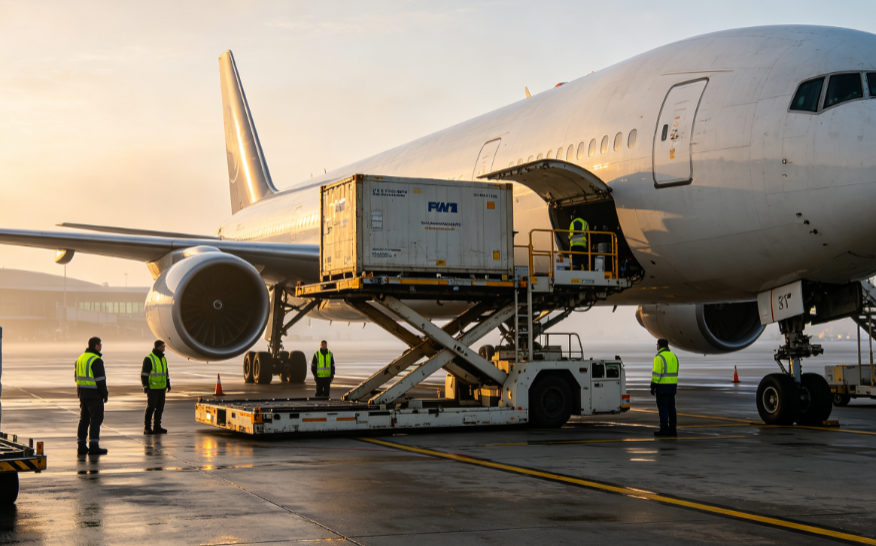
· Extended Flight Distance and Reduced Payload: To avoid sensitive airspace, airlines are forced to take longer detour routes. This not only increases fuel consumption per flight but, more critically, requires additional fuel carriage, which directly reduces effective payload capacity.
· Sharp Fluctuations in Fuel Surcharge (FSC): Affected by international crude oil price volatility and detour costs, major airlines have significantly accelerated FSC adjustments since May. For forwarders, the validity period of spot quotations has shortened to less than 48 hours, making quotation risk management a core challenge in Q2.

II. Market Opportunities: Air Logistics Gains from Sea Freight Delays
Ongoing delays in the sea freight market are creating structural opportunities for air logistics, while simultaneously intensifying resource scarcity.
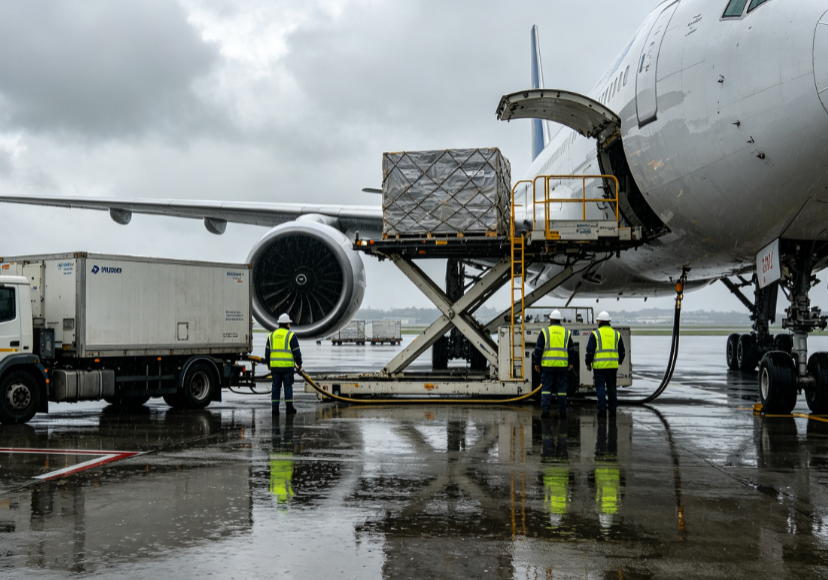
· Surge in Urgent Replenishment Demand: Sea freight detours have extended average port arrival times by 10–15 days. As a result, large volumes of electronic components and high-value industrial parts originally shipped by sea are shifting to air to fill inventory gaps. This “sea-to-air” shift has caused freighter space to enter sold-out status in advance by late May.
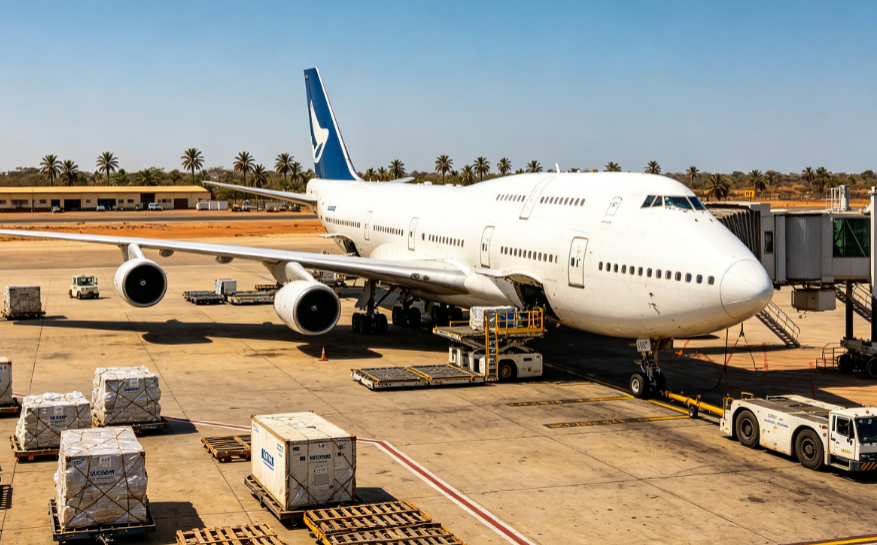
· Shift in Hub Importance: With increased pressure on Middle East transit hubs, Far East gateways such as Singapore (SIN), Bangkok (BKK), and Hong Kong (HKG) have seen their strategic importance rise further. HMI Logistics recommends that partners pay close attention to second-leg connections at these hubs to avoid prolonged cargo dwell times.

III. Collaboration Recommendations: Ensuring Performance Under Pressure
In a resource-scarce Q2, cooperation between forwarders is shifting from “price-driven” to “resource-assurance-driven.”
1. Leverage BSA Resources to Hedge Spot Market Volatility In an environment of soaring spot rates, fixed Block Space Agreements (BSA) become particularly valuable. Through long-term agreements with key airlines, HMI Logistics provides partners with reliable space protection. We recommend guiding direct clients toward monthly plans rather than relying on uncertain spot space.
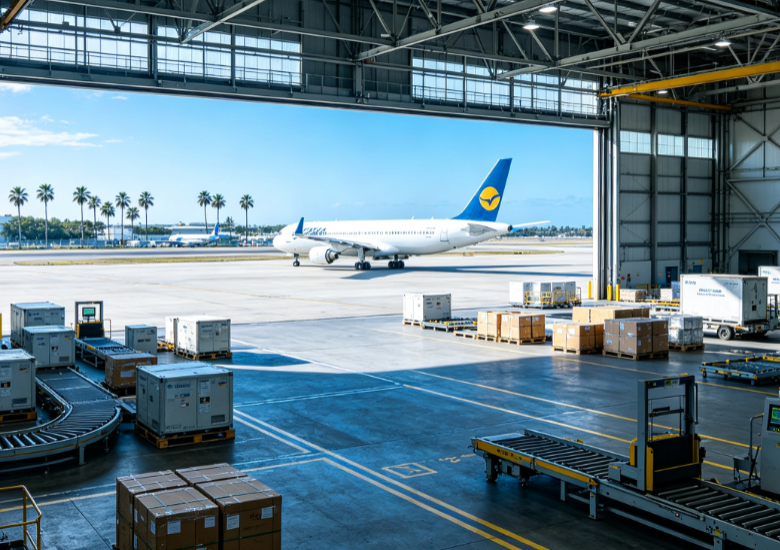
2. Flexible Routing Design: Avoiding Traditional Congestion When traditional direct routes are disrupted, HMI Logistics utilizes its extensive Southeast Asia and Central Asia agent network to develop alternative “air-air” and “land-air” interline routings. Transiting through non-sensitive areas effectively avoids geopolitically affected airspace and ensures contract fulfillment.
3. Strengthen Compliance Review to Prevent Technical Delays Under the current situation, European and American customs and airlines have implemented extremely strict supervision on cargo flows related to sensitive regions. We remind all forwarders to carefully review cargo manifests and end-use declarations to prevent goods from being detained at transit hubs due to sensitive descriptions or compliance issues, which could result in irreversible losses.

HMI Logistics Outlook: H2 2026 Trend Forecast
The Q2 2026 market trend will serve as a barometer for the full year’s air logistics industry. As the Middle East situation evolves, air logistics is gradually shifting from a simple “transportation tool” to a “strategic reserve resource.”
For forwarders and partners, success in this period depends on three key factors:
1. Resource Breadth — The ability to reallocate capacity across regions.
2. Response Speed — Whether alternate routes can be switched within 12 hours of sudden airspace closures.
3. Information Transparency — The ability to provide customers with accurate, real-time node alerts.
HMI Logistics remains committed to providing the strongest resource support for global freight forwarding partners in uncertain times — turning crises into opportunities and creating pathways through turbulence.

About HMI Logistics
HMI Logistics is a professional organization specializing in traditional international air logistics and capacity solutions for global forwarders. We secure space with strength and stand firm with professionalism. HMI Logistics stands with you to overcome challenges together.
---
Your Reliable Logistics Partner, Anytime, AnywhereHMI Logistics
Shenzhen HMI Logistics Co., Ltd.


I have a shipment and would like to confirm the price and delivery time?
Contact Us
Links
百度
Contact Us

Add:Room 1212-1222, Yueyun Building,
Wenjin South Road Luohu District, Shenzhen, China

Contact:Jay Huang

QQ:1347028931

E-Mail:smo@hmishipping.com

Tel:0755-25272724

Follow HMI
  • Copyright:©2023 Shenzhen HMI Logistics Co., Ltd 粤ICP备2026046888号-1 粤公网安备44030002012876号 Sitemap Power by Szzghl